
 08045811827
 Send Inquiry
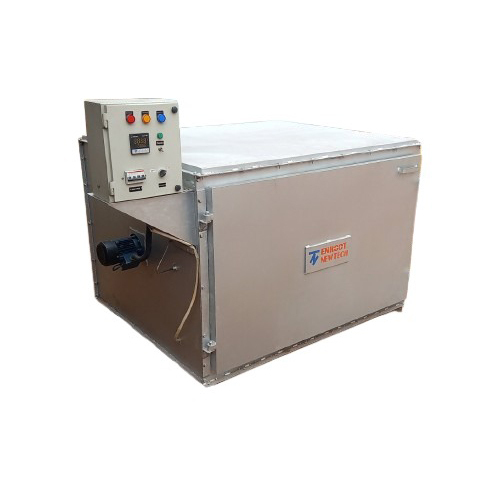
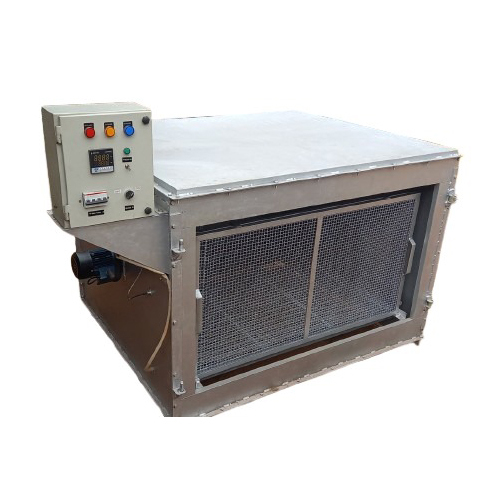
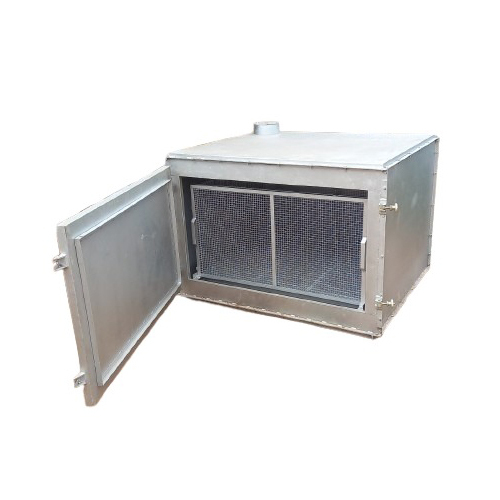
Electric Copra Dryer
75000 INR/Unit
Product Details:
- Operating Temperature Up to 80C
- Features Minimal Supervision, Temperature Control, Quick Drying
- Noise Level < 60 dB
- Feeding System Manual / Conveyor
- Function Type Drying
- Heating Method Electric Heater with Blower
- Machine Type Batch Type Dryer
- Click to view more
X
Electric Copra Dryer Price And Quantity
- 75000 INR/Unit
- 1 Unit
Electric Copra Dryer Product Specifications
- Up to 80C
- Copra Drying from Raw Coconut
- Thermostatic with Digital Display
- Copra (Coconut Kernel)
- Silver / Metallic
- No
- Rectangular Chamber
- Electric Hot Air Dryer
- Yes
- < 60 dB
- Minimal Supervision, Temperature Control, Quick Drying
- Floor/Standalone
- Manual / Conveyor
- Copra Dryer Machine
- Drying
- 220V/380V
- 1600 x 1000 x 2000 mm (customizable)
- 3 kW 12 kW (depending on capacity)
- 300 kg 2000 kg per batch
- Uniform Drying, Low Maintenance, Energy Efficient
- Batch Type Dryer
- Electric Heater with Blower
- Electric
- Variable
- 50Hz / 60Hz
- Single / Three Phase
- 720
- Semi-Automatic / Fully Automatic
- Stainless Steel
- Fixed Base with Castor Wheels (Optional)
- On-site Installation & Training
- Perforated Stainless Steel
- IP54 Rated
- High Density Fiber Glass
- Approx. 30 min
- Double Insulated Hinged Door
- Up to 6% final moisture
- 10C 45C
- Overheat Protection, Emergency Shut-off
- High Efficiency Induction Motor
- Axial Fan Driven
- 6 - 10 Hours
Product Description
Product Details
1 .On the machine and set the temperature at 75 cAnd pre heat the chamber. Cut the coconut and keep ready to load.
2 .. Load the coconuts
Split the coconuts in half and place them on trays in the dryer with the cups facing sideways.
3 .Adjust the temperature
Use the energy regulator, inlet valve, and exhaust lid to achieve the desired temperature. For copra, the inlet air temperature is typically 75C.
4. Dry the coconuts
Run the dryer for the desired amount of time, which can range from 8 to 14 hours.
5. Remove the shells
Once the coconuts are partially dried, remove the outer shells.
6. Repeat
Reload the trays with the cups facing up and continue drying until the desired moisture level is reached.
The desired moisture level for copra is typically 6%.
Uniform and Rapid Copra Drying
Engineered for batch-based production, this dryer leverages powerful axial fans and stainless steel drying trays for uniform airflow distribution. The design reduces moisture content to as low as 6%, ensuring copra is adequately preserved for further processing or storage. Fast batch cycles help increase throughput with minimal supervision required.
Enhanced Safety and Durability
Focusing on operational safety, the dryer incorporates overheat protection, an IP54-rated control panel, and a double insulated door. Emergency shut-off and high-density fiber glass insulation add another layer of protection, making it a reliable choice for industrial copra processing environments.
Flexible Operation and Easy Installation
The dryer is built for versatile use, with floor or standalone installation, customizable sizes, and optional castor wheels for mobility. It works with both single and three-phase power supplies, accommodating different site requirements. On-site installation and training are provided to ensure hassle-free setup.
FAQ's of Electric Copra Dryer:
Q: How does the electric copra dryer achieve uniform drying of coconut kernels?
A: The dryer uses a powerful axial fan-driven hot air circulation system and perforated stainless steel trays to ensure that hot air is evenly distributed across all copra. This design eliminates hotspots and guarantees uniform drying throughout each batch.Q: What is the typical drying process and how long does a batch take to complete?
A: The drying process begins with a pre-heating phase of around 30 minutes. Once at operating temperature (up to 80C), copra is loaded onto the trays, and the drying cycle runs for approximately 6-10 hours per batch, depending on moisture level and capacity.Q: Which safety features are included to protect operators and the machine?
A: For safety, the dryer has overheat protection, an emergency shut-off system, a double insulated door, and a high-density fiber glass insulated chamber. The control panel is IP54-rated to prevent dust and moisture ingress, ensuring user safety and equipment longevity.Q: Can this dryer be installed in various environments and is the setup process supported?
A: Yes, the dryer is suitable for ambient temperatures between 10C and 45C. It can be installed as a standalone or floor-mounted unit, and castor wheels are available for optional mobility. On-site installation and training are provided to ensure smooth commissioning.Q: What are the main benefits of using this electric copra dryer for coconut processing?
A: Primary benefits include highly efficient and uniform drying, reduced manual supervision, energy savings due to modern insulation and ventilation, and minimal maintenance. The dryer increases productivity by quickly reducing copra moisture content, supporting better storage and processing.Q: How is the drying temperature and operation controlled during use?
A: Operation is fully automatic, managed by a thermostatic control system with a digital display for precise temperature adjustments. The dryer also offers variable speed modes, and users can monitor and optimize the drying process to suit different copra types.Q: Where can this electric copra dryer be sourced and who provides after-sales support?
A: This dryer is manufactured in India and available for export globally. After-sales support includes on-site installation and training, with ongoing service provided by the manufacturer or authorized suppliers, ensuring customers receive comprehensive help and maintenance.Tell us about your requirement

Price:
Quantity
Select Unit
- 50
- 100
- 200
- 250
- 500
- 1000+
Additional detail
Mobile number
Email

Other Products in 'Coconut Processing Machines' category


GST : 29AAGFN7785D1ZT

- BYK-6-130, Industrial Estate Baikampady, Dist- Dakshina Kannada,Mangaluru - 575011, Karnataka, India
- Phone :08045811827

- Mr. Varun (Partner)
- Mobile :08045811827
- nt@newtechindustries.net

|


Branch Office : Shed Number D - 116, Baikampady Industrial Estate, Baikampady Post, And New Mangalore - 575011.
 Send Inquiry
 Send SMS
 Call Me Free
NEW TECH INDUSTRIES
All Rights Reserved.(Terms of Use)
Developed and Managed by Infocom Network Private Limited.
Developed and Managed by Infocom Network Private Limited.

